Master's degree in Georesource EngineeringChoose your specialisation: Mineral Resources, Geotechnics or Post-Mining
Are you interested in the social and technical challenges involved in the extraction of georesources? Do you want to play an active role in the sustainable development of mining regions, their ecological restoration and subsequent further development? Are you interested in environmental monitoring?
Are you interested in the extraction and processing of mineral raw materials? Are you interested in how resources can be utilised in a technically sound and environmentally friendly manner, and would you like to play an active role in shaping the raw materials and energy transition?
Or do you find it exciting to investigate and assess subsoil conditions for construction projects and to oversee geotechnical construction measures?
Then join us at Georg Agricola University of Applied Sciences. This Master’s programme opens up a wide range of future prospects for you in the security and rehabilitation of domestic and global raw material regions.
A seamless transition from a bachelor’s degree
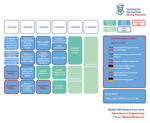
Our Master’s programme in Georesource Engineering builds seamlessly on our THGA Bachelor’s programmes:
However, it is also possible to transfer from other geoscience and engineering degree programmes.
At the start of the programme, you can choose which area you wish to specialise in for your Master’s degree. There are three specialisations to choose from:
Whether bridge foundations, tunnels or landfill sites – geotechnical structures form the basis of modern infrastructure and link the built environment with the natural world. The Master’s programme in Geotechnical Engineering at THGA equips students with the skills to safely design, assess and construct complex structures in the ground and using earthworks materials.
The programme focuses on advanced geotechnical design methods for above- and below-ground structures, the analysis of geotechnical risks, and the professional management of groundwater and mine water. The curriculum is complemented by a wide range of optional modules, enabling individual specialisation.
The programme is deliberately designed for graduates of both natural science and engineering bachelor’s degree programmes. Integrated revision modules help to consolidate the fundamentals and ensure a common level of expertise.
The programme culminates in a Master’s thesis, in which students independently apply their knowledge to a specific problem. This can be carried out experimentally in the geotechnical laboratory, using computer-aided methods in the Digital Geolab, or through analytical calculation methods.
The scope for choice is deliberately diverse: whether in the laboratory or in the field, in collaboration with companies or within the framework of scientific research – students can tailor their Master’s thesis to their interests and career goals.
The degree programme has a clear objective: to prepare graduates as effectively as possible for their career start. Through field trips, specialist talks from the business world and close interaction with alumni, students gain early insights into the practical side of the industry and forge valuable contacts within the construction sector.
Germany is a country rich in natural resources and is well-placed to establish its own domestic supply of raw materials, including, in part, critical raw materials. However, it is important to keep the environment and post-closure management in mind. This enables you to assess the entire process of georesource projects, from the initial concept through exploration, extraction, closure and post-closure management.
The post-mining specialisation qualifies you to plan and carry out the complex processes of closure and aftercare in a position of responsibility. You will deal with long-term tasks, including the management of (mine) water, decommissioning, and the recultivation, remediation and reuse of former mining sites.
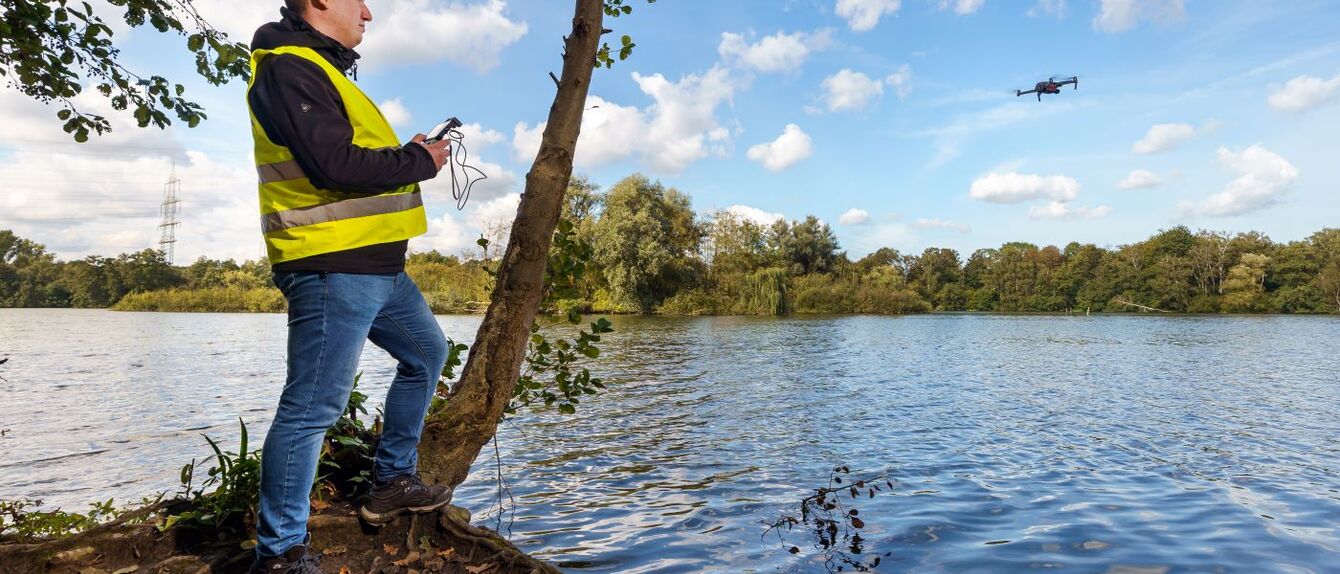
Environmental monitoring using drones and satellites, amongst other tools, will also form part of your remit. In addition, we will train you to become a manager and/or project leader in both business and technical contexts. For your degree programme, which is offered exclusively at the THGA in Germany, we combine engineering with geosciences and natural sciences. You will be actively involved in lectures, practical sessions and work placements.
The technologies of the future are not just developed in laboratories or factories – they begin deep underground. Whether it’s wind turbines, electric vehicles or modern digital infrastructure: many innovations designed to make our society more sustainable rely on mineral resources. At the same time, their extraction and use are now more than ever caught between the conflicting demands of the environment, the economy and society.
This is precisely where the Mineral Resource programme comes in. Here, you will address the central question of how raw materials can be responsibly extracted, efficiently utilised and secured for the long term.
During your studies, you will learn to understand and shape the entire life cycle of raw materials: from the exploration and development of deposits, through planning and production, to the sustainable closure and aftercare of mines. In doing so, you will combine fundamental scientific principles with modern engineering methods and gain an in-depth understanding of the complex processes involved in raw material extraction.
At the same time, you will develop the ability to independently define, structure and implement challenging projects. In doing so, you will always take into account the global, economic, ecological, political and social conditions within which raw materials projects are implemented today. Particular emphasis is placed on identifying challenges at an early stage, Identifying research needs and developing innovative solutions.
In addition to technical expertise, you will acquire key skills for working in interdisciplinary teams: you will learn to coordinate projects, take on responsibility and communicate results clearly.
The Mineral Resource Engineering programme thus qualifies you for research-oriented engineering work across the entire mineral resource lifecycle – from exploration and production through to sustainable post-mining management. You will become part of a new generation of engineers who are actively shaping the challenges of mineral resource supply and developing solutions for a sustainable future.
Which Master’s specialisation you choose depends entirely on you, your interests and your academic strengths. However, you can change your specialisation at any time later on.
Regardless of which specialisation you choose, you will in any case gain an insight into the other specialisations.
Study part-time or full-time
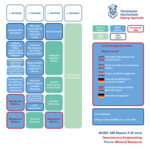
You can complete your Master’s degree either as a full-time programme over three semesters, attending our evening classes, or as a part-time programme over five semesters. You will write your Master’s thesis in the fourth or sixth semester.
During your studies, you will deepen and broaden the specialist knowledge you gained during your Bachelor’s degree. To this end, we offer excellent teaching and superbly equipped laboratories. See for yourself with a 360-degree tour.
Further information about the course
Qualification
- Master of Science (M.Sc.)
- Master’s degrees from universities of applied sciences meet the educational requirements for senior civil service positions. Upon completion of the programme, there is the option of pursuing a joint PhD.
Programme options
- 6-semester part-time evening programme
- 4-semester full-time evening programme
Start of programme
- in the summer semester and the winter semester
Language of instruction
- Mineral Resources: English
- Geotechnical Engineering: German and English
- Post-mining: German and English
Details regarding language certificates and proficiency levels can be found in the relevant FPO or in the enrolment regulations.
Entry requirements
- The Master’s programme requires a professionally qualifying higher education degree (Bachelor’s or Diplom) in a relevant engineering or natural sciences subject.
The degree must have been completed with a minimum of 180 ECTS credits.
Admission may also be granted in individual cases if other degrees are held. Please contact the relevant academic advisory service for further information.
The Georg Agricola University of Applied Sciences (THGA) is a state-recognised university in Bochum, in the heart of the Ruhr region.
There are no tuition fees – only a semester fee is charged, which includes the Deutschlandticket for public transport.
Excellent career prospectsYour master's degree will open up new opportunities for you
Your Master’s degree opens up a wide range of career opportunities in industry, research and development, or senior civil service. Upon completion of your studies, you will also be eligible to pursue a PhD, paving the way for a career in academia.
Our ServicesWe support you

International Office