Master's degree in Business Engineering

At the interface between technology and economics
Are you fascinated by the success of products and companies? And do you wonder why others fail?
Do you tinker with projects until you fully understand even complex issues?
Are you enthusiastic about designing processes, working in a team and managing interfaces?
Then the Master's programme in Industrial Engineering offers you the best prospects.



Study Plan
-
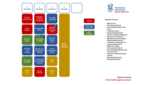 Study Plan_Master_Business_Engineering_Fulltime pdf, 153 KB
 -
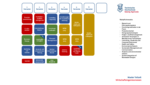 Study Plan_Master_Business_Engineering_Part time pdf, 175 KB
Part-time studiesPlan promotion
Studying at THGA offers the advantages of flexible study organisation and small learning groups.
Courses are offered in the evenings and on Saturdays. This allows you to organise your studies yourself, set your own pace and thus ensure that you can balance your career, further education and family life. We would be happy to advise you in a personal consultation.
Our professors and external lecturers have many years of practical experience.
All information on enrolment and dates can be found here.
Excellent career prospectsSought-after executives
Combined with your professional experience, this master's degree provides an excellent foundation for highly qualified and challenging management positions.
Added value MasterYour future
With a master's degree, you will not only stand out positively from bachelor's degree graduates when applying for jobs, but you will also be able to impress employers who are looking for problem-solving skills and critical thinking across economic and technical disciplines.
As future managers, you will be well prepared for the complex demands of business practice and will be able to analyse and assess issues at both strategic and operational levels – enabling you to take on responsibility beyond traditional areas of application.
Even in the Bachelor's programme in Industrial Engineering, we offer courses such as ‘English in Industrial Engineering’ to prepare you as well as possible for an international career. The Master's programme includes further English-language modules. This makes perfect sense, as many graduates go on to work in an international context after completing their studies. At this point, the focus is on the English-language modules in the Master's programme as preparation for a possible international career.
Or, if you want even more: with a master's degree, you will lay an excellent foundation for a broad academic education that will prepare you for a career in research – e.g. in the form of a cooperative doctorate – or pave the way for a higher civil service position.
Regulations from WiSe 26/27
-
 Master-Hochschulprüfungsordnung_2026.pdf pdf, 2 MB