Bachelor’s degree in Applied Materials Sciences
Have you ever wondered what modern materials are made of and how their properties can be specifically improved?
How can steel be made even stronger or iron even more resistant?
And what technologies are behind the production of these materials, which are used in vehicles, rail transport and the energy industry?
Then the bachelor's degree programme in Applied Materials Science is just right for you! Study at THGA Bochum, because we train you for practical work!
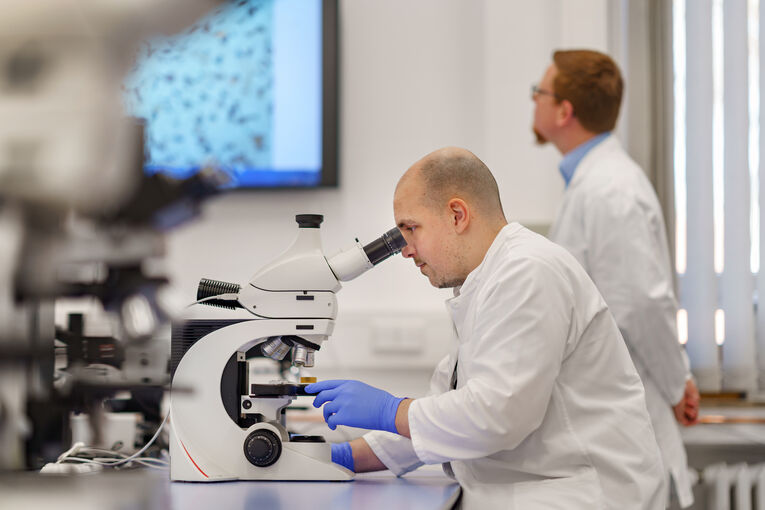
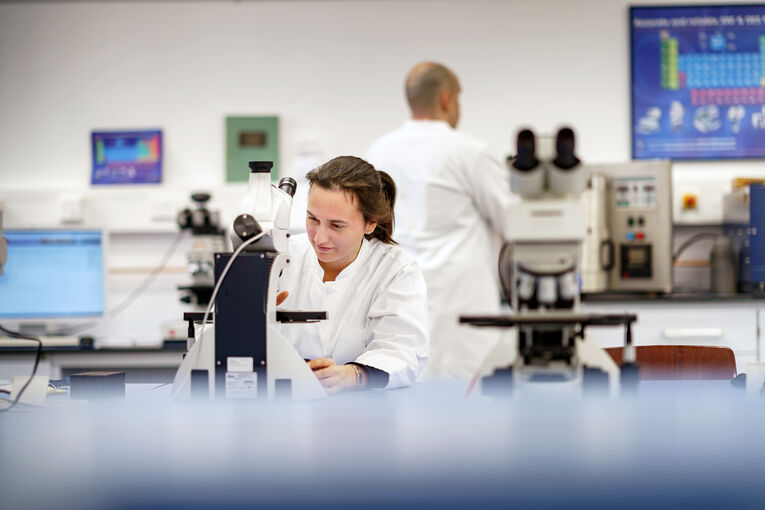
Study full-time, part-time or work&study - the choice is yours
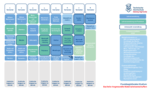
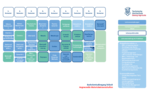
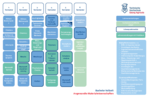
You can study with us full-time or part-time while working. We also offer work&study in conjunction with a company. You can complete your bachelor's degree in applied materials science in six semesters full-time or nine semesters part-time. You then study in the afternoons, evenings or Saturdays. With Work&Study, you study for eight semesters and work in a company.
Even better: We guarantee you a 4-day work week, whether you work full-time or part-time. This provides the ideal conditions to balance your job, family, and career development.
We do not charge tuition fees. There is only a semester fee, which includes the Deutschland-Ticket for public transports.
You can find all information about the enrolment and dates here.

More Information
Career prospectsMany opportunities
As an engineer in applied materials science, you have a varied and exciting field of activity open to you: This includes the development of new materials as well as the selection and processing of materials in design, production or plant operation. After graduating, you can expect excellent career prospects in almost all industrial sectors, as well as in testing organisations and the public sector. Here are a few examples:
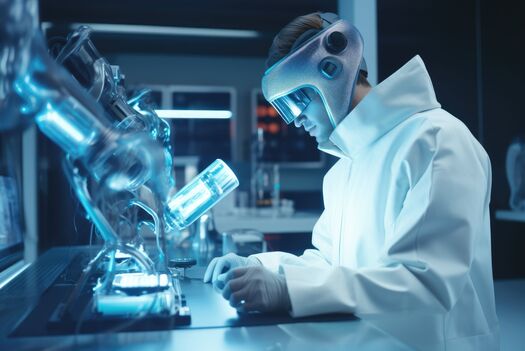
In the field of laboratory analysis, you and your team will analyse samples and objects using state-of-the-art methods. Your tasks include taking and preparing samples as well as analysing and documenting the test results. You will organise your team and the tasks to be completed.

In production planning and control, you will organise and monitor production or work processes. Your tasks include preparing work steps, managing the deployment of personnel and resources and ensuring compliance with specifications and deadlines. You are responsible for organising the efficient use of materials and production processes!

In the field of appraisal and expert activities, you will analyse the value of objects, examine cases of damage and draw up expert reports on materials, among other things. Your tasks also include checking compliance with standards and advising customers. Your expertise provides clarity and certainty!
Close to practice
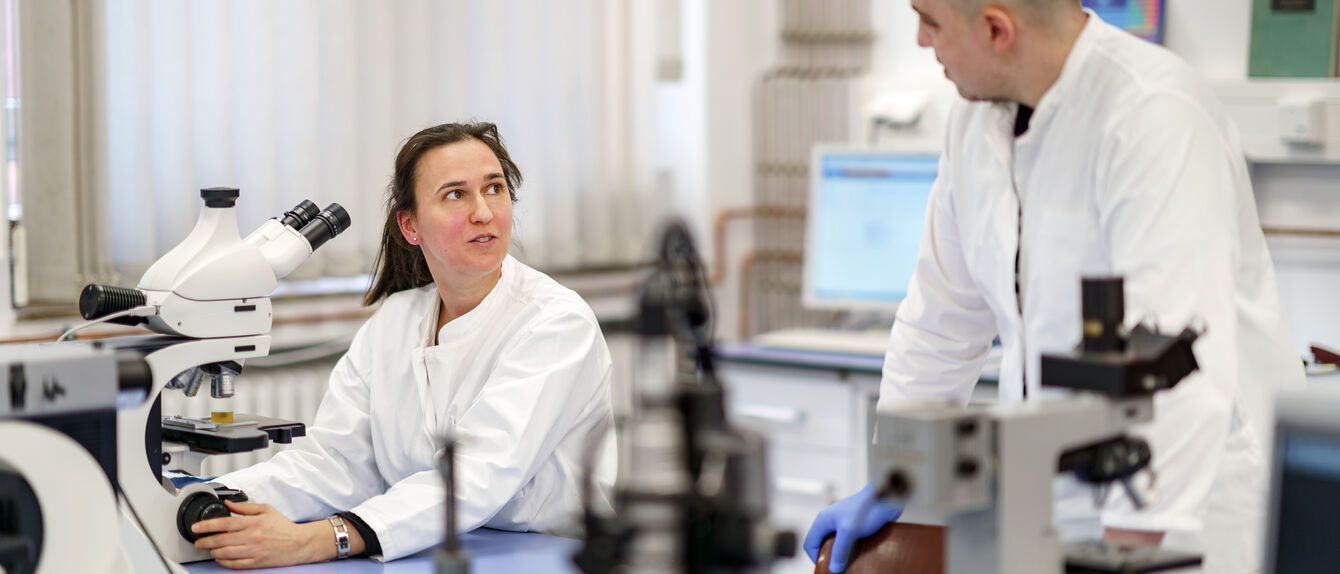
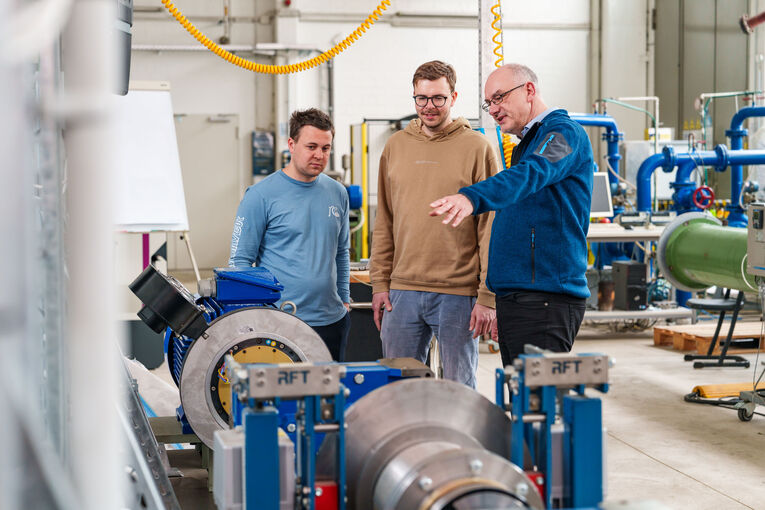
In addition to sound theoretical knowledge, you will gain valuable practical experience in modern laboratories and exciting project work. Our course content is developed in close cooperation with renowned partners and is continuously adapted to current industry requirements.
These partners rely on the quality of our programme:
![[Übersetzen nach: Englisch] Logo Evonik Kooperationspartner der THGA](/fileadmin/_processed_/d/f/csm_Evonik-brand-mark-Deep-Purple-RGB_2aec28f184.jpg)







Additional qualification
If you want to set yourself apart from others right at the start of your career, our programmes are just right for you. They offer you the chance to get off to an excellent start in your job by gaining additional certificates during your studies.
Here you will learn the basics of training to become a welding engineer or welding technician. You will get to know various welding techniques, learn about the behaviour of materials during welding and deal with strength theory, weld seam calculations and the design of welded joints. You will successfully take the Welding Technology I exam at the THGA and then sit a written exam at the SLV Duisburg (costs approx. 160 euros). Further information is available from our student counselling service.
In cooperation with SLV Duisburg, we offer discounted participation:
Non-destructive material testing (NDT) provides important information about the quality of components or structures. Visual inspection is one of the most important non-destructive testing methods and is required, for example, by the EN 1090 standards series for all welded joints.
Other testing methods—such as dye penetrant testing, magnetic particle testing, or ultrasonic testing—are well-established procedures used in many industrial sectors, including plant engineering, mechanical engineering, steel construction, power plant construction, and vehicle manufacturing.
Participation in the course is offered at a 50% discount.
After successfully completing the course, you will have the opportunity to take the exam for an internationally recognized, DAkkS-accredited certificate at TÜV Nord.
Work&study programme
Gaining work experience and studying at the same time is no problem for us. Work experience and study go hand in hand. Here you have the opportunity to earn money during your studies and actively work on your career at the same time. Our work-study programme offers an optimal combination of engineering studies and practical work experience.
Add a Master`s degreeStraight away
Building on your Bachelor's degree, you can study the Material Engineering and Conservation Science oder Mechanical Engineering Master's programme, which is unique in Germany and Europe. We look forward to meeting you!