Bachelor’s degree in Electrical Engineering
Study Electrical EngineeringDiscover the future of energy and automation
Have you ever wondered how we can ensure enough energy for our everyday lives in a sustainable way in a world that is increasingly relying on e-mobility?
Have you ever delved into the fascinating world of artificial intelligence (AI)? Do you know how much automation there is in buildings or what smart grids and the Internet of Things (IoT) are all about?
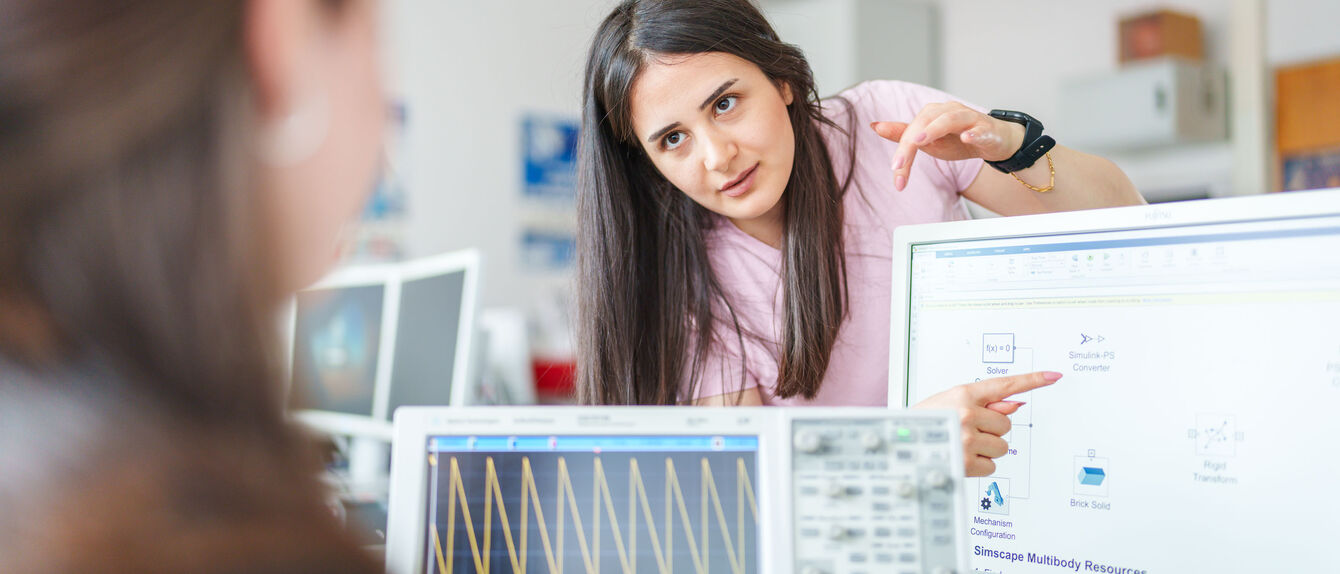
You can explore and answer these and many other fascinating questions in the practical study of electrical engineering. With a focus on energy technology, automation technology and general electrical engineering, we prepare you for a versatile and future-oriented career.
Uncomplicated entry into engineering studies
In the Electrical Engineering programme, we support you even before you start your studies with preparatory courses where you can refresh your knowledge. At the beginning of your studies, we build on this and ease your transition to university, whether you are coming from school, vocational training or work. In the following semesters, we deepen the content step by step.
To maintain a balance between theory and practice, our internships are evenly distributed throughout the entire course of study.
Our electrical engineering programme has no admission restrictions and no tuition fees.
Artificial intelligence and sustainabilityFurther course content
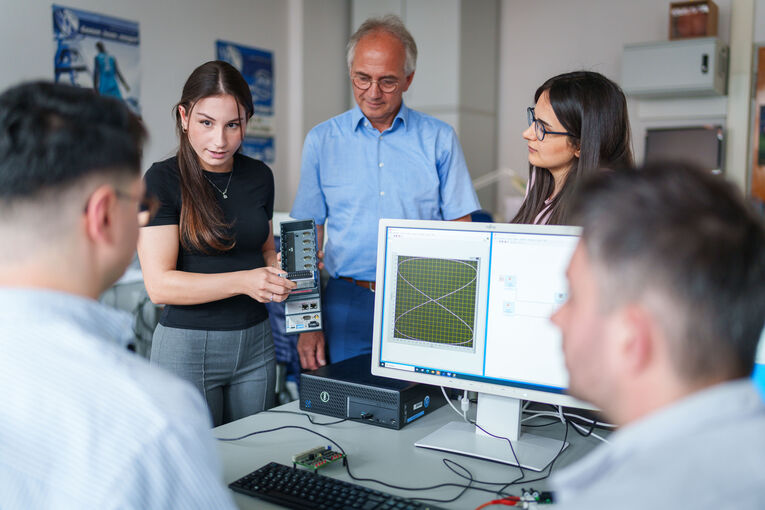
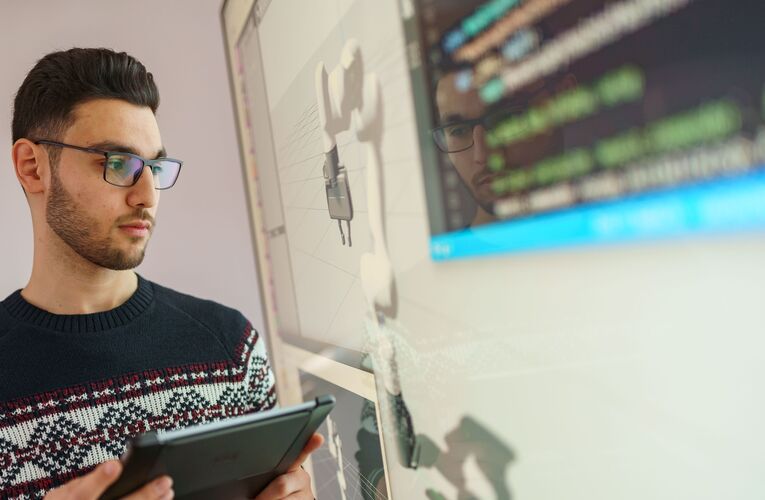
Part of the programme also focuses on sustainability and AI. In addition to conventional forms of energy generation, you can explore renewable sources. You will learn more about electrical energy networks and the challenges they face in the energy transition. Or you can focus on machine learning and work with AI. Just like the IT industry, electrical engineering is currently undergoing many changes due to artificial intelligence, which we address in the programme.
Full-time or part-time or work&study - the choice is yours
You can study electrical engineering full-time in six or part-time in nine semesters. When studying full-time, you have the opportunity to choose your individual specialisation from the fourth semester onwards. In addition to general electrical engineering, you can also focus on automation technology or energy technology. In the part-time programme, you focus on general electrical engineering.
Good to know: We don’t just focus on theoretical knowledge; practical work in the labs is an integral part of the course.
We do not charge tuition fees. There is only a semester fee, which includes the Deutschland-Ticket for public transport.
You can find all information about the enrolment and dates here.
Study Specialisations
This specialisation is an exciting combination of energy technology and automation technology. It is the basis for the changes in factories, cities and the means of transport of the future. You will immerse yourself in the world of electrical power generation, where we explore the sources and technologies that power our electricity supply. From traditional methods to renewable energy, you will explore the many ways in which electricity is generated and how it powers our society. But that's not all, as you'll also explore technologies around machine learning, artificial intelligence and connected devices.
Here you will learn how industrial processes can be automated. Sensors play a role in automation. For example, they record building data and forward it automatically. This makes it possible to control a building's power supply. Modern microelectronics play an important role here and help to drive technology forward.
You are concerned with how electrical energy is produced, transported and distributed. The central question here is how to generate and use electrical energy in a safe, cost-effective and environmentally friendly way. The energy transition will increasingly emphasise renewable energy sources such as wind power, photovoltaics and hydropower. You will learn how to generate energy from these sources, how to deal with fluctuations and how to manage consumption safely. It is just as important to expand electricity grids or further develop energy systems.
Degree:
Bachelor of Science (B.Sc.)
Duration:
Full-time: 6 semesters
Part-time: 9 semesters (Major General Electrical Engineering)
Programme start:
Generally, the programme starts in the winter semester; however, students can also enrol in the summer semester.
Entry requirements:
University Entrance Certificate (non-standard entry is also considered), the Bachelor programme is taught entirely in German. Proof of C1 must be provided.
Your Career ProspectsCrisis-proof job with good pay
As a Bachelor of Electrical Engineering, you have a wide range of career options. You can see a few examples here:

As a development engineer, you develop new products or modify them. You tinker with technologies and find ways to make things better, faster and more efficient. It's a mixture of technology, creativity and problem solving that makes this job so exciting.

In this job, you will shape the future of energy supply! You will not only lead a team, but also coordinate projects that make the electricity grid smarter. As part of the team, you will look for customised solutions for digital local grid and customer transformer stations to make the energy supply even more efficient.
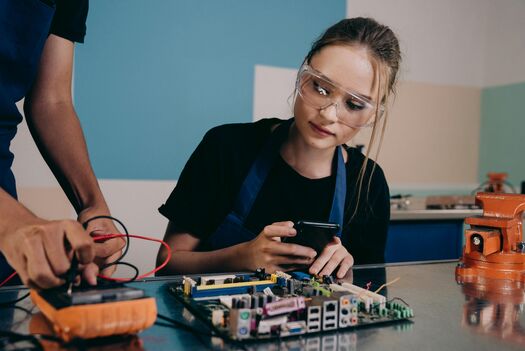
As a Hardware Developer, you will be the creative mind behind the latest technological devices that can change the world! You will be involved in the process of developing IT hardware products from start to finish. From basic ideas to system architecture - your expertise is in demand.
Add a Master's degree straight away
Continue your studies at the THGA: With a bachelor's degree in electrical engineering in your pocket, you can continue your career. We offer you the advanced Master's degree programme in Electrical Engineering and Information Technology.