Bachelor’s degree in Geotechnical Engineering and Applied Geology
Do you wonder what kind of soil is needed to support a skyscraper? Or would you like to find out how to plan a tunnel through a mountain? Or why a dam doesn't break?
Are you curious about how our earth is structured and how resources can be used in a technically and environmentally compatible way?
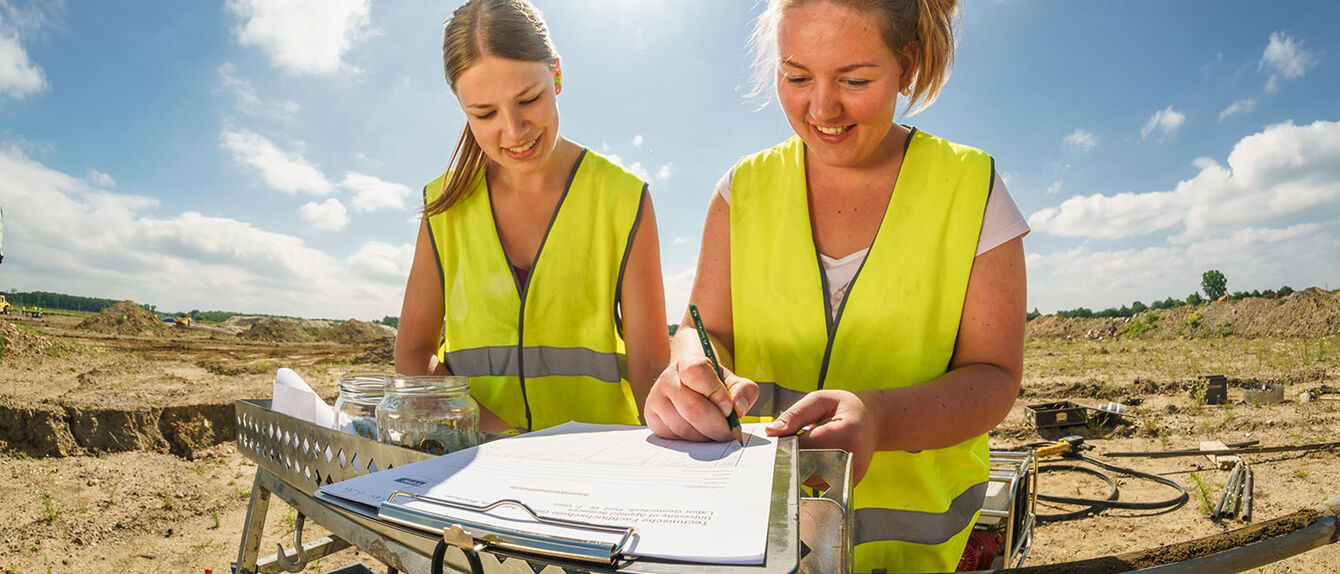
Do you generally enjoy using modern technology and are you just as happy outdoors as you are making plans on the computer? Then you should definitely study geotechnical engineering and applied geology with us! With us you'll learn to do the linkage between the fieldwork and the analytic work.
Fundamentals and advanced studiesWhat to expect
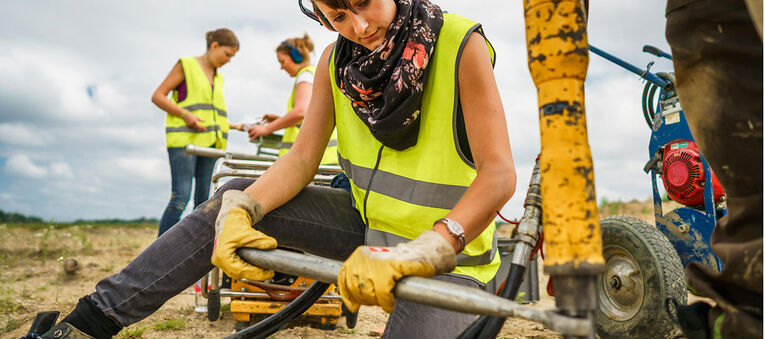
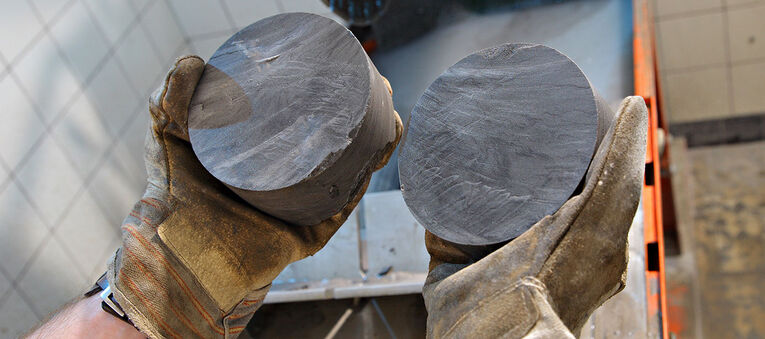
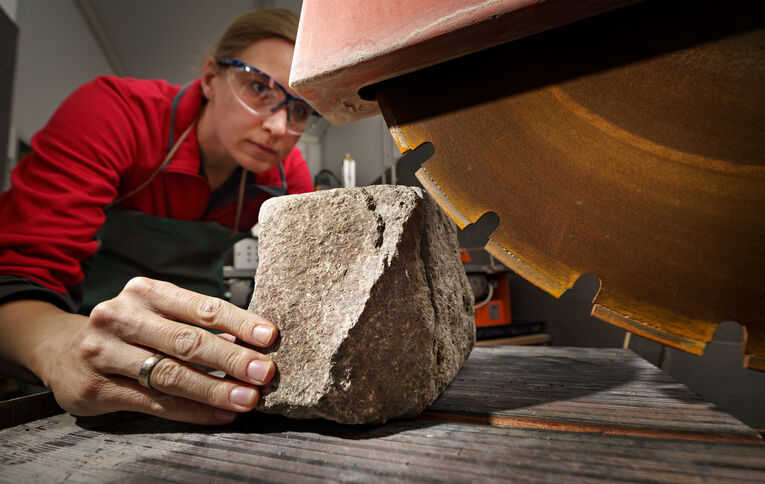
In addition to natural sciences, engineering and technical fundamentals in areas such as mathematics, chemistry, surveying and geology, you can tackle exciting subject-specific content during your studies. Whether drilling technology, earthworks and foundation engineering or everything related to hydrology – we offer an extremely versatile and varied degree programme with plenty of practical experience through numerous excursions.
Classic full-time or full-time in combination with vocational training The choice is yours
For your full-time studies, we guarantee you a 4-day week without reducing the quality or scope of your studies. This means you have one fixed day for your plans, your job or your family.
The geotechnical engineering programme in the practical association combines training and study – it is full-time and runs on two tracks. You start with an apprenticeship and, from the third year of training, your full-time studies begin with us, tailored to your training. This will take you a little longer than a traditional full-time degree, but you will end up with two degrees.
Facts and figures – overview
Degree:
Bachelor of Science (B.Sc.)
Duration:
6 semesters
Programme start:
Summer semester and winter semester
Entry requirements:
University Entrance Certificate (non-standard entry is also considered), the Bachelor programme is taught entirely in German. Proof of C1 must be provided.
Versatile careerJob with options
Geotechnical engineers work for mining companies, surveying and planning offices, public administrations, universities and scientific institutes. They deal with issues relating to the extraction, development and processing of raw materials (e.g. coal, ore, natural gas, oil, groundwater). They measure and collect geotechnical data, evaluate it and create geotechnical maps, profiles and plans.
Master's degreeContinue
For a seamless transition you can continue your studies at THGA with a Master's degree in Georesource Engineering. You can choose the Specialisatoin in Geotechnical Engineering and deepen your geotechnical know-how.Further on you'll broaden your overall knowledge regarding comprehensive topics in the field of georesources.
As a second choice there is the Specialisation in Post-Mining. This programme is unique in Germany and trains engineers to plan and implement the complex processes involved in mine closure and aftercare in positions of responsibility. It also deals with the extraction and processing of mineral raw materials. The programme combines scientific and technical qualifications at the interface between mining surveying, geodesy and geotechnical engineering.
No matter which Specialisation you choose, you'll be able to extend your management and professional skills and parlay your knowledge in different elective subjects.